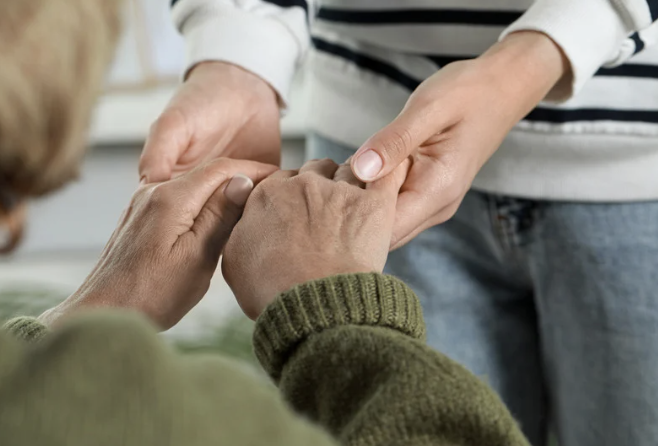
Cancer caregiving doesn’t come with a handbook. Most days, it looks like managing medications, appointments, insurance calls, meals, and emotions - often all at the same time. If you’re also a parent (or have ever been one), this rhythm may feel familiar. While caring for an adult loved one is very different from caring for a child, many caregivers recognize similar rhythms - being constantly “on,” managing logistics, and putting their own needs last.
Many caregivers tell themselves that this is temporary. I’ll rest later. I’ll take care of myself once things calm down. But cancer, like parenting, isn’t a short sprint. It’s ongoing, unpredictable, and emotionally demanding. And no one is meant to carry it alone.
This is where self-care and collective care meet - not as trends or ideals, but as necessities.
The Risk of Burnout is Real
Caregiver burnout doesn’t come from a lack of love or effort. It comes from caring deeply and also holding too much responsibility by yourself.
Common things that can lead to burnout:
Skipping meals or sleep
Managing constant logistics and decisions
Feeling pressure to stay strong and positive
Hesitating to ask for help
Carrying emotional fear or grief privately
Reimagining Self-Care: Critical Maintenance, Not Indulgence
For caregivers, self-care is not indulgence; it’s critical maintenance. Just like any essential responsibility you wouldn’t skip, it’s basic care.
Here are some practical ideas for self-care to consider:
Physical Care - We wouldn’t expect our loved ones to function without food or rest; we shouldn’t expect that from ourselves either.
Eat something every 4–6 hours
Drink water during appointments or medication times
Rest when you can - don’t wait for ideal conditions
Mental Load Relief - Trying to remember everything is exhausting! Using some of these ideas isn’t giving up control - it’s a way of conserving your energy for more important things.
Write things down
Use reminders and alarms
Keep one place for notes and questions
Emotional Care - Caregivers may feel responsible for managing everyone else’s emotions. The notion of “being strong” can sometimes make us contain our natural feelings. This doesn’t make caregiving any easier - on the contrary, it can make things lonelier.
Have one safe place to release your own feelings
Talk honestly with someone you trust
Let yourself feel frustrated, sad, or scared without judgment.
“But I Don’t Have Time”- Making Care More Sustainable
With so much on one’s plate, the idea of self-care can sound great in theory and impossible practically. This is real. The solution then isn’t to add more tasks to your to-do list; it’s to consider how care is or can be distributed.
Some practical and sustainable adjustments to consider:
Sitting down while your loved one rests instead of cleaning
Taking phone calls outside or in the car for quiet
Pairing errands with something grounding (listening to your favorite music, getting some fresh air outside)
Letting non-essential tasks go on hard days
One Small Step
Consider taking one small step that feels accessible to you this week.
Some ideas could be:
Asking for help once
Eating one full meal each day
Stepping outside daily
Scheduling your own appointment
While these actions may seem small, when they are repeated and supported by others, caregiving can become more sustainable.
The Importance of Collective Care
Recognizing that cancer doesn’t affect just one person, but entire families and communities, collective care is the practice of looking out for each other. It shifts the focus from expecting caregivers to carry everything alone to sharing responsibility for support, rest, and connection. As members of a community, each of us can support one another in sharing this care responsibility.
Collective care can show up in small, meaningful ways:
Friends bringing meals instead of just offering support
Family members taking on specific tasks
Employers offering flexibility without caregivers having to explain themselves repeatedly
Communities acknowledging caregiving as real labor
At its root, collective care reminds us that caregiving is not intended to be an act of quiet endurance, but rather a shared commitment to identify, respond to, and guarantee that no one has to navigate cancer alone.
Asking for Help - A Collective Practice
Often caregivers wait until they’re exhausted to ask for help - this can happen for many reasons, and sometimes it’s because they don’t want to burden others or feel like they should manage on their own.
Collective care can be most helpful when requests are specific.
Instead of vague offers, consider asking:
“Can you pick up groceries this week?”
“Can you sit with my loved one for an hour on Tuesday?”
“Can you make one phone call for me?”
Receiving help in this way is not a failure by any means. On the contrary, it’s participating in care as a shared practice. One task. One time. No apology required.
Care Isn’t Meant to Be Carried Alone
Cancer caregiving is relational and works best when it’s shared.
While self-care can help you function, collective care can help keep you connected.
You matter - not after everyone else, but rather alongside them. When care is shared, no one has to disappear to keep someone else going. At Flatwater, we believe mental health support is essential for cancer caregivers. We are dedicated to providing access to mental health therapy for those impacted by a cancer diagnosis, their families, and loved ones. We are here for you.